Personal Project

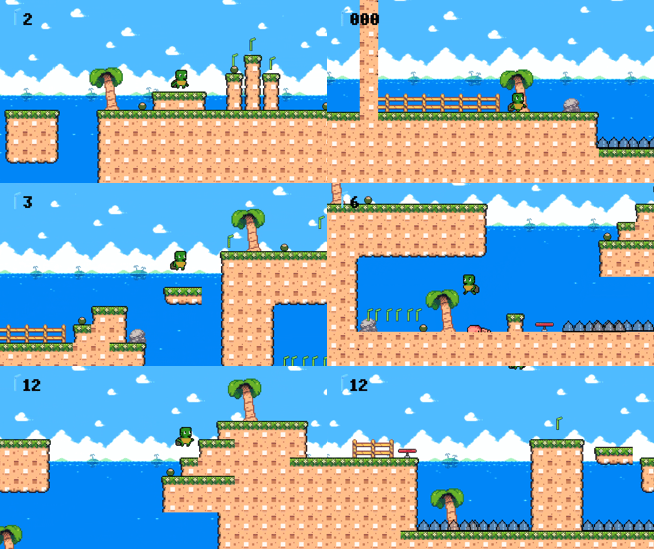
Mad Turtle is a 2D platformer where you play as Thur, a sea turtle seeking to save marine life from plastic pollution. After losing a close friend due to an infestation of straws in the ocean, Thur ventures onto land, discovering that humans are behind the contamination. Players must help him face obstacles, platforming challenges, and environmental hazards to protect his people.
The project was developed as part of a selection process, entirely solo, in just one week. As the sole developer, I handled:
-
Game Design and Level Design
-
Programming
-
Pixel Art and Visual Design
-
Music and Sound Effects
-
UI/UX
-
Documentation (GDD)
I started by writing a brief Game Design Document to organize ideas, define scope, and guide next steps. This was essential for managing my time efficiently and keeping the project focused under a tight deadline.
Since I was working alone, my main challenge was balancing all disciplines while keeping the game coherent. I focused on building:
-
Simple but solid platforming mechanics
-
Basic obstacle patterns related to the environmental theme (like straws and trash)
-
Clear level structure that introduced challenges progressively
Creating everything from scratch in a week taught me a lot about pacing and progression, especially in platformer design. Managing player flow, introducing new obstacles at the right time, and maintaining difficulty balance were constant considerations.
Looking back, there are several things I would refine:
-
Polish the entire experience: from visuals to gameplay feel
-
Redesign core mechanics: adding more meaningful abilities and interactions
-
Improve level pacing and challenge progression: introducing hazards more gradually and with better ramp-up
-
Expand environmental feedback: making the connection to the pollution theme more present in both narrative and mechanics
Mad Turtle was a rapid solo project that helped me develop skills across multiple areas, but especially sharpened my sense of scope control and pacing in platformers. It also pushed me to think critically about how mechanics, theme, and player experience connect, something I’m constantly applying to my current projects.